
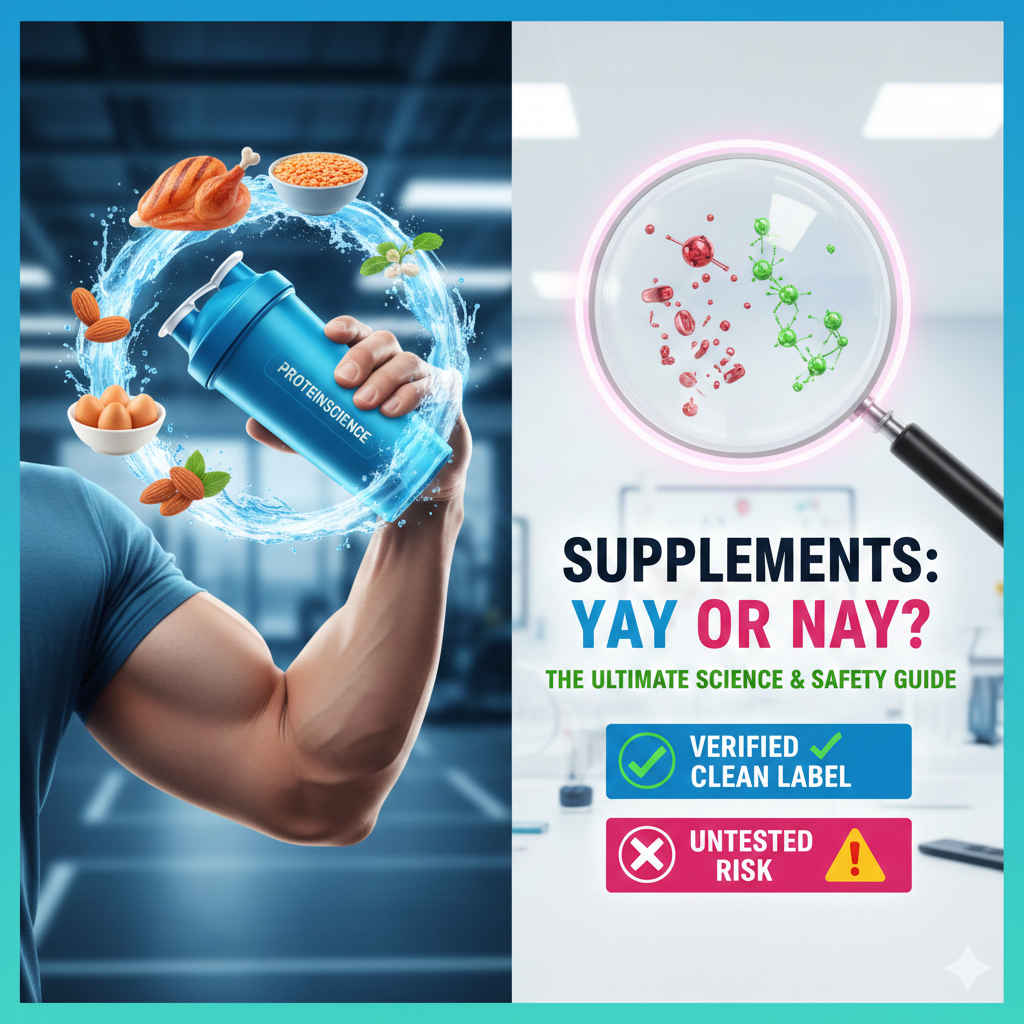
The modern protein shake is arguably the most ubiquitous health supplement on the planet. What began as a niche product for competitive bodybuilders is now a mainstream, multi-billion-dollar enterprise, projected to surge to $6.6 billion by 2025. Protein supplements offer unparalleled convenience and precise nutritional density, proving indispensable for specific health and fitness goals.
But here is the central, often-overlooked dilemma: while pharmaceuticals face rigorous pre-market testing, protein powders and other dietary supplements are largely unregulated by bodies like the U.S. Food and Drug Administration (FDA). This regulatory gap creates a volatile market where consumers—you—must navigate a minefield of potential hazards, from toxic heavy metals and economic fraud to the risk of consuming banned performance-enhancing drugs.
Is your daily scoop a “Yay” for optimal gains, or a silent “Nay” that exposes you to unnecessary risks?
This comprehensive guide delivers the definitive, evidence-based verdict. We will dissect the science behind your protein requirements, demystify the different supplement types, ruthlessly expose the contamination crisis, and provide an essential, failsafe strategy for safe product selection. Let’s dive deep. 👇
I. Determining Your “Why” 🤔: Establishing the Scientific Need for Supplementation
Before grabbing a scoop, the first question is always: do you truly need a supplement, or can your requirements be met by whole foods? The answer depends entirely on your specific physiological goals.
The Baseline and the Ceiling of Safety
For the general, healthy adult, the established international Recommended Dietary Allowance (RDA) for protein is a modest grams per kilogram of body weight () per day. This is the basic requirement needed to prevent deficiency and sustain essential metabolic functions, but it is not optimized for growth or high activity levels.
When considering maximum intake, scientific consensus indicates that long-term consumption of up to grams per kilogram of body weight per day is generally safe for healthy adults. Some highly adapted individuals may tolerate an upper limit of up to grams per kilogram of body weight per day. However, chronic intake exceeding may introduce unwarranted strain, associated with potential renal, digestive, and vascular abnormalities. More protein is not always better.
Elevated Requirements: Who Benefits Most from the Scoop?
The primary justification for supplementing protein lies in the difficulty of consistently reaching high protein goals using only whole food sources, particularly when managing calorie intake.
🏃 The Athlete and the Fitness Enthusiast
If you are regularly engaging in moderate to intense resistance training, your body’s demand for repair and synthesis increases dramatically. The American College of Sports Medicine recommends consuming between to grams of protein per kilogram of body weight per day to support muscle hypertrophy and recovery.
Furthermore, during periods of calorie restriction aimed at fat loss, protein intake must be elevated further to protect existing muscle mass. To effectively preserve lean tissue while cutting fat, experts advise aiming for to grams per pound of body weight (approximately ), which is difficult to achieve without a convenient, low-fat source like powder.
👵 Combatting Age-Related Muscle Loss (Sarcopenia)
Sarcopenia, the loss of muscle mass and function associated with aging, is a major public health challenge. Older adults are strongly advised to consume grams of protein per kilogram body weight per day to preserve functional performance, muscle mass, and overall strength .
This recommendation is amplified by a physiological quirk of aging: older muscle tissue requires a much stronger signal to initiate muscle protein synthesis (MPS). While young adults optimally stimulate MPS with essential amino acid (EAA) mixtures containing about leucine, older individuals require a substantially higher concentration, approximately leucine, to achieve the same anabolic effect. High-quality, leucine-rich supplements, such as whey, deliver this concentrated signal efficiently, serving an essential role in preserving mobility and independence.
🌿 Navigating Plant-Based Diets
Individuals adhering to vegan or predominantly plant-based diets must often contend with differences in protein quality and bioavailability. Plant-based proteins generally possess a lower anabolic capacity due to differences in amino acid composition (specifically lower leucine content, e.g., soy protein is leucine compared to in whey) and reduced absorption kinetics compared to animal proteins.
To counter this, a strategy of compensatory dosing is necessary. Studies show that increasing the dose of plant-based protein can compensate for these deficiencies. For instance, ingesting of wheat protein hydrolysate can result in MPS rates that are comparable to, or even surpass, those achieved by of whey protein. Vegan athletes, particularly those in phases of high training or energy restriction, should therefore aim for protein intakes towards the higher end of the recommended spectrum—potentially up to —to ensure adequate muscle support. Powders offer the precision needed to hit these high targets without excessive calorie intake.
Timing and Distribution: Maximizing Anabolic Signaling
Optimal results are not solely about the total amount consumed; they are also about the timing. Total daily protein intake should be strategically fractionated, with a target of approximately grams of protein at each major meal to maximize anabolic signaling throughout the day.
While the post-workout shake is iconic, current science shows that consuming protein before resistance exercise is also highly effective. Pre-workout consumption ensures amino acids are readily available in the bloodstream to circulate during and immediately after the workout, fueling immediate repair. Post-exercise, aim for at least to grams of protein within two hours to stimulate muscle growth effectively.
| Category | Recommended Intake (g/kg/day) | Purpose | Risk Level |
| Minimum (RDA) | 0.8 g/kg (Body Weight) | Basic requirement to prevent deficiency and sustain essential metabolic functions. | Low |
| Optimal/Active Safe | 1.2 – 2.0 g/kg | Safe range for highly active adults and athletes seeking muscle growth and recovery. | Low |
| Safety Threshold | Up to 2.0 g/kg | Generally safe for long-term consumption in healthy adults. | Low to Moderate |
| Upper Limit (UL) | Up to 3.5 g/kg | Tolerable for highly adapted individuals, but higher levels are generally discouraged. | High |
| Risk Zone | Over 2.0 g/kg (Chronic) | May introduce unwarranted strain and is associated with potential renal, digestive, and vascular abnormalities. More protein is not always better. | Elevated |
II. Decoding the Scoop: Classification and Absorption Kinetics
Protein supplements are fundamentally differentiated by their source and processing level, which determines their rate of digestion and thus their ideal use case.
🥛 Dairy-Based Proteins: Whey and Casein
Both derived from milk, whey and casein offer opposite kinetic profiles :
-
Whey Protein (The Fast Absorber): Whey is highly valued for its rapid digestion and quick entry into the bloodstream, making it perfect for immediately triggering MPS post-exercise.
-
Whey Protein Concentrate (WPC): The most economical and least processed form, typically around protein purity. It retains higher levels of lactose, fats, and carbohydrates.
-
Whey Protein Isolate (WPI): Filtered to remove nearly all fat and lactose, achieving purities often exceeding . It’s ideal for lactose-sensitive individuals or those on strict, low-calorie diets.
-
Whey Protein Hydrolysate (WPH): This is a “pre-digested” form where the protein chains are broken down into smaller peptides (hydrolysis), allowing for ultra-rapid absorption—ideal for immediate recovery, but often with a bitter or less palatable taste .
-
-
Casein Protein (The Slow Burn): Casein forms a gel in the stomach, resulting in a prolonged, sustained release of amino acids. This anti-catabolic effect makes micellar casein particularly beneficial for consumption before bed, minimizing muscle breakdown during extended overnight fasts.
🌾 Plant-Based and Specialty Proteins
Plant-based powders, typically made from pea, rice, soy, or hemp, are often combined to create a “complete” protein profile containing all nine essential amino acids.
Collagen is another animal-based product, derived from connective tissues. It is marketed primarily for skin, joint, and gut health. However, the scientific evidence supporting these specific health claims remains limited and inconclusive.
III. The Critical “Nay” ⚠️: Unmasking Contamination and Fraud
The most compelling argument against the universal consumption of protein supplements lies in the pervasive safety and quality risks found in uncertified products. This is the reason unverified products warrant an Absolute Nay.
1. Risk 1: Toxic Heavy Metals (Lead, Cadmium, Arsenic)
Since the FDA does not mandate pre-market testing for these products, consumers are exposed to significant risks. Independent investigations, such as those conducted by Consumer Reports, have revealed widespread heavy metal contamination. Alarmingly, more than two-thirds of protein powders and shakes tested contained levels of lead in a single serving that exceeded what experts deem safe for daily consumption.
Chronic, repeated exposure to these metals presents serious, cumulative health consequences :
-
Lead: Accumulates in the body and is linked to high blood pressure, nerve damage, and kidney issues in adults. Critically, children and pregnant individuals are most vulnerable, as lead can damage the developing brain and nervous system, potentially causing neurological issues, learning delays, and behavioral problems.
-
Cadmium & Inorganic Arsenic: Frequently detected and classified by the EPA as a probable human carcinogen (Cadmium) and a known human carcinogen (Inorganic Arsenic).
The Plant Protein Paradox and the Flavor Trap
The source of the protein dictates contamination risk. Plant-based protein powders tend to harbor a higher overall heavy metal burden compared to animal-based whey alternatives. This is due to the inherent mechanism of absorption: plants pull metals like lead and cadmium directly from the contaminated soil and water in which they are grown .
This mechanism creates unexpected correlations in product quality :
-
The Organic Paradox: Counter-intuitively, protein powders labeled “organic” have been found to contain, on average, three times more lead and twice the amount of cadmium than non-organic products . The “organic” label verifies agricultural practices but not purity from environmental pollutants.
-
The Flavor Trap: Chocolate-flavored powders have been documented to contain up to 110 times more cadmium than vanilla-flavored counterparts, likely because cocoa naturally accumulates heavy metals from the soil .
2. Risk 2: Adulteration and Banned Substances
Beyond environmental toxins, consumers face economic fraud and doping risk.
Amino/Nitrogen Spiking: Fraudulent Labeling
Amino spiking, or nitrogen spiking, is a deceptive practice intended to artificially inflate the protein content listed on the product label. Manufacturers add inexpensive, non-protein nitrogen (NPN) compounds, such as the non-essential amino acids Glycine and Alanine, along with Taurine and Creatine. Since laboratory tests traditionally estimate protein content based solely on total nitrogen, these cheap additions “spike” the nitrogen count, giving a false impression of a higher protein percentage than is biologically useful. This results in a diluted product with an imbalanced amino acid profile, which negatively affects key fitness goals.
Undeclared Pharmaceuticals and Doping Risks
For athletes, or anyone subject to drug testing, the risk is severe. Supplements, particularly those marketed for rapid gains, are susceptible to being adulterated with potent, undeclared pharmaceuticals. These include illegal anabolic agents (like SARMs, DHEA, or Testosterone), stimulants, diuretics, and masking agents, many of which are explicitly banned by organizations like the NCAA. The consumption of contaminated products can lead to adverse health effects and career-ending positive drug tests. The FDA frequently issues public warnings and recalls regarding products found to contain these undeclared drugs.
IV. Contraindications: Who Should Avoid Supplements?
While protein is essential, high protein intake is not appropriate for everyone.
🚫 Individuals with Chronic Kidney Disease (CKD)
Individuals with Chronic Kidney Disease should strictly avoid high-protein diets and supplementation unless medically supervised. Elevated protein consumption can increase intraglomerular pressure, leading to glomerular hyperfiltration which may aggravate structural damage and accelerate CKD progression. For CKD patients, a low-protein diet (LPD), typically around to grams per kilogram per day, is usually recommended.
⚠️ Exceeding Tolerable Upper Limits
Chronically consuming protein above grams per kilogram body weight per day should be avoided by all individuals, even healthy ones, to prevent unnecessary long-term stress on renal and digestive systems.
🍎 Reliance Over Whole Foods
Protein powders are reductionist; they provide high macro-nutrient density but often lack the comprehensive array of vitamins, minerals, antioxidants, and phytochemicals found in whole foods. Relying heavily on supplements to the exclusion of nutrient-dense whole foods can lead to a diet that is quantitatively sufficient in protein but qualitatively deficient in micronutrients vital for immune function, heart health, and overall wellness. Supplements should complement, never replace, a diverse diet.
V. Consumer Due Diligence: Selecting a Safe, High-Quality Product
Given the significant, proven risks of contamination and fraud, the only reliable defense for consumers is to prioritize products verified by independent third-party certification bodies. This is the step that turns a potential “Nay” into a Conditional “Yay.”
The Regulatory Imperative for Independent Testing
Since manufacturers are responsible for ensuring safety and labeling accuracy , the burden falls on the consumer to seek out unbiased verification. Third-party testing involves an independent, unbiased laboratory assessing the product against specific quality standards. This crucial validation provides assurance that the product is free of contaminants and that the label claims match the contents.
🛡️ The Gold Standard: Understanding Certification Seals
Not all certification seals offer the same level of verification. Users—especially athletes, children, or pregnant individuals—should seek certifications that specifically test for both banned substances and heavy metals.
| Certification Seal | Primary Focus | Banned Substance Testing (Anti-Doping) | Heavy Metal/Contaminant Testing |
| NSF Certified for Sport® | Purity, Anti-Doping, Contaminants | Yes (Screens banned substances) |
Yes (Lead, Mercury, Arsenic, Cadmium, Mycotoxins) |
| Informed Sport / Informed Choice | Anti-Doping Focus |
Yes (Screens banned substances) |
Yes (Toxicology assessments) |
| USP Verified (United States Pharmacopeia) | Label Accuracy and Purity | No (Focus is Purity/Labeling) | Yes (Contaminant testing) |
The NSF Certified for Sport® standard is widely recognized as the gold standard because it not only verifies label claims but also rigorously screens for over substances banned by major athletic organizations and evaluates products for toxic elements including lead, mercury, arsenic, and cadmium .
Your Practical Shopping Checklist:
-
Prioritize Verification: Always select products bearing the NSF Certified for Sport® seal. This is your single best defense against both doping risks and cumulative heavy metal exposure.
-
Avoid Spiking Indicators: Carefully inspect the ingredient list. If inexpensive, nitrogen-rich compounds like Glycine, Alanine, Taurine, or Creatine are listed prominently just after the primary protein source, it may indicate amino spiking and fraudulent labeling. Choose a product where the primary protein (e.g., “Whey Protein Isolate”) is the first and most dominant ingredient.
-
Mitigate Uncertified Risk: If you choose a non-certified product, mitigate your risk by selecting whey-based protein over plant-based, and choose vanilla or unflavored options over chocolate, as these statistically carry a lower heavy metal burden .
-
Balance the Budget: Remember that supplements can be expensive. Use them strategically when convenience or high-density protein is crucial, but rely on lean whole foods for the majority of your daily protein to ensure comprehensive micronutrient intake.
VI. Final Verdict: Conditional YAY. Absolute NAY Without Verification. 🎯
Are protein supplements necessary for general health? No. A well-planned diet built on whole foods can meet the protein needs of the vast majority of the general population.
Are they useful? Yes. For achieving specialized, high protein goals—including supporting high-volume training (), combating sarcopenia in older adults (), or meeting the high demands of plant-based athletes—protein powders are an exceptionally effective and convenient tool. For these specific, justified needs, the answer is a Conditional YAY.
However, the persistent and severe safety concerns—including toxic lead contamination in over two-thirds of unverified products , economic fraud via amino spiking , and the presence of undeclared banned substances —introduce risks that are too significant to ignore.
Therefore, the final verdict is clear: use protein supplements as a strategic, highly effective nutritional tool only when your needs are elevated and only when the product bears verifiable third-party certification. Purchasing an uncertified protein powder is an unnecessary health gamble, warranting an Absolute NAY Without Verification.
Choose your scoop wisely, verify every label, and optimize your gains safely. Your health is the greatest investment! 💪
🔗 You May Also Find These Readings Helpful:
VII. Comprehensive Reference List
-
Babiker, A., et al. (2024). Effects of protein supplementation. PMC10761008.
-
Bandara SB, Towle KM, Monnot AD. A human health risk assessment of heavy metal ingestion among consumers of protein powder supplements. Toxicol Rep. 2020 Aug 21;7:1255-1262. [https://pmc.ncbi.nlm.nih.gov/articles/PMC7509468/]
-
Consumer Reports (Advocacy). CR investigation finds two-thirds of protein powders contained high levels of lead. [https://advocacy.consumerreports.org/press_release/consumer-reports-investigation-finds-two-thirds-of-protein-powders-and-shakes-tested-contained-high-levels-of-lead-in-a-single-serving/]
-
Patel V, Aggarwal K, Dhawan A, Singh B, Shah P, Sawhney A, Jain R. Protein supplementation: the double-edged sword. Proc (Bayl Univ Med Cent). 2023 Dec 20;37(1):118-126. [https://pmc.ncbi.nlm.nih.gov/articles/PMC10761008/]
-
Lonnie M, Hooker E, Brunstrom JM, Corfe BM, Green MA, Watson AW, Williams EA, Stevenson EJ, Penson S, Johnstone AM. Protein for Life: Review of Optimal Protein Intake, Sustainable Dietary Sources and the Effect on Appetite in Ageing Adults. Nutrients. 2018 Mar 16;10(3):360. [https://pmc.ncbi.nlm.nih.gov/articles/PMC5872778/]
-
Wu G. Dietary protein intake and human health. Food Funct. 2016 Mar;7(3):1251-65. [https://pubmed.ncbi.nlm.nih.gov/26797090/]
-
Mass General Brigham. Protein intake guidelines for muscle building and satiety ( for athletes). [https://www.massgeneralbrigham.org/en/about/newsroom/articles/how-much-protein-when-working-out]
-
Traylor DA, Gorissen SHM, Phillips SM. Perspective: Protein Requirements and Optimal Intakes in Aging: Are We Ready to Recommend More Than the Recommended Daily Allowance? Adv Nutr. 2018 May 1;9(3):171-182. [https://pmc.ncbi.nlm.nih.gov/articles/PMC5952928/]
-
Jang YJ. The Effects of Protein and Supplements on Sarcopenia in Human Clinical Studies: How Older Adults Should Consume Protein and Supplements. J Microbiol Biotechnol. 2023 Feb 28;33(2):143-150. [https://pmc.ncbi.nlm.nih.gov/articles/PMC9998208/]
-
Hertzler SR, Lieblein-Boff JC, Weiler M, Allgeier C. Plant Proteins: Assessing Their Nutritional Quality and Effects on Health and Physical Function. Nutrients. 2020 Nov 30;12(12):3704. [https://pmc.ncbi.nlm.nih.gov/articles/PMC7760812/]
-
Rogerson D. Vegan diets: practical advice for athletes and exercisers. J Int Soc Sports Nutr. 2017 Sep 13;14:36. [https://pmc.ncbi.nlm.nih.gov/articles/PMC5598028/]
-
Australian Sports Nutrition. Whey concentrate vs isolate vs hydrolysate differences. [https://www.australiansportsnutrition.com.au/blogs/education-hub/whey-concentrate-vs-whey-isolate-vs-hydrolysed-whey-whats-the-difference]
-
University of Georgia. Protein supplement types (collagen, plant blends) and applications. [https://healthcenter.uga.edu/protein-powder-the-what-why-how-to-choose/]
-
Jain S, Muneer S, Guerriero G, Liu S, Vishwakarma K, Chauhan DK, Dubey NK, Tripathi DK, Sharma S. Tracing the role of plant proteins in the response to metal toxicity: a comprehensive review. Plant Signal Behav. 2018;13(9):e1507401. [https://pmc.ncbi.nlm.nih.gov/articles/PMC6204846/]
-
FDA. Health fraud product database (undeclared pharmaceuticals). [https://www.fda.gov/consumers/health-fraud-scams/health-fraud-product-database]

Akanksha Sharma
Dr. Akanksha Sharma, Head Writer and creator of AtoZ of Pregnancy, is dedicated to empowering women, parents, and families through 360-degree knowledge. She and her team provide evidence-based advice to guide families through pregnancy, parenting and beyond.

Leave a Reply