
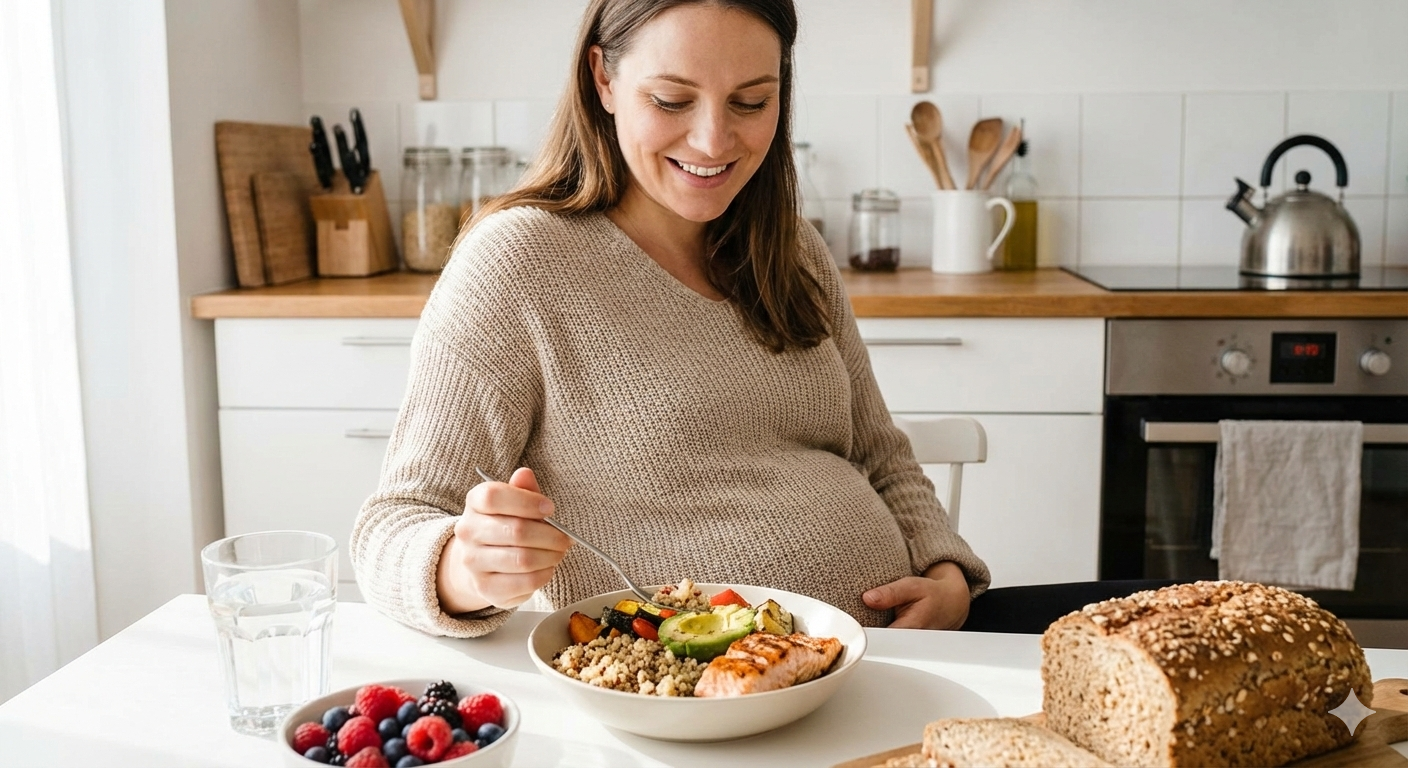
[Written & reviewed by Dr Akanksha Sharma, MBBS MD (Preventive & Community Medicine)], Updated on [Dec, 2025]
Pregnancy and the postpartum period are often talked about as two separate phases.
In reality, they are one continuous journey of nutritional demand, recovery, and adaptation.
If you’re pregnant, newly postpartum, or planning ahead, you’ve likely heard:
-
“Eat for two”
-
“Just focus on the baby”
-
“Lose the weight later”
-
“This is normal after delivery”
This guide is written to remove confusion, not add rules.
Nutrition during pregnancy and postpartum is not about perfection—it’s about adequacy, recovery, and long-term health.
Why nutrition matters beyond pregnancy
Pregnancy nutrition does not end at delivery.
The postpartum body is:
-
Healing tissues
-
Restoring iron and nutrient stores
-
Supporting lactation (for many women)
-
Rebalancing hormones
-
Adapting to sleep deprivation and stress
👉 How you eat after delivery influences:
-
Energy levels
-
Mood
-
Milk production
-
Long-term metabolic health
-
Recovery from pregnancy complications
Pregnancy nutrition: what truly matters
Pregnancy nutrition is often overcomplicated online. Let’s simplify.
Core priorities during pregnancy
-
Adequate energy intake
-
Sufficient protein
-
Iron, calcium, iodine, folate, & vitamin B12
-
Omega-3 fatty acids
-
Hydration
It is not about:
❌ Eating excessively
❌ Cutting carbs
❌ Fear-based food avoidance
Trimester-wise focus (high level)
First trimester
-
Focus: nausea management, hydration, & sufficient folate intake
-
Small frequent meals often work better
Second trimester
-
Increased protein and calcium needs
-
Energy requirements begin to rise
Third trimester
-
Iron, protein, and calorie needs peak
-
Digestive comfort becomes important
👉 Nutrient needs increase gradually—not suddenly.
Related reading:
👉 Balanced Pregnancy Diet at 6 Months
👉 10 Foods Pregnant Woman Should Eat for a Healthy Pregnancy
Postpartum nutrition: the most neglected phase
The postpartum period is often treated as an afterthought.
However, it is a critical recovery window.
Postpartum nutrition supports:
-
Wound healing (vaginal birth or C-section)
-
Muscle and tissue repair
-
Milk production (if breastfeeding)
-
Mood stability
-
Prevention of nutrient deficiencies
Related reading:
👉 Postpartum Nutrition: Doctor’s Insights for Optimal Recovery
👉7-Day Meal Plan for Postpartum Recovery: Traditional Indian Diet
Common postpartum nutrition myths
❌ “Eat very little to lose weight”
❌ “Avoid fats completely”
❌ “Traditional foods are unscientific”
In reality, postpartum nutrition should be:
-
Warm
-
Nourishing
-
Protein-adequate
-
Easy to digest
-
Culturally familiar
Breastfeeding & nutrition (without pressure)
Breastfeeding increases:
-
Energy needs
-
Fluid requirements
-
Certain micronutrient needs
However:
-
Perfect diets are not required
-
Milk quality is generally preserved
-
Severe restriction affects maternal health first
👉 A nourished mother supports a nourished baby.
Related reading:
👉 Boosting the Fat Content of Breast Milk Naturally: Diet & Herbal Remedies
Weight changes after pregnancy: a realistic view
Postpartum weight retention is influenced by:
-
Pregnancy weight gain
-
Sleep deprivation
-
Hormonal shifts
-
Stress
-
Physical activity levels
Weight loss is not a priority in early postpartum.
Recovery comes first.
Related reading:
👉 Starter Guide to Getting Your Body Back After Having a Baby
Emotional health & nutrition after birth
Postpartum nutrition affects:
-
Energy
-
Mood
-
Stress resilience
Undereating or restrictive diets can worsen:
-
Fatigue
-
Irritability
-
Anxiety
-
Low mood
Food is not just fuel—it is support.
Related reading:
👉Post-partum Depression and the Baby Blues: Causes and Management
When personalised guidance helps
Consider professional support if:
-
You feel exhausted despite eating
-
Recovery feels slow
-
You had anemia, GDM, thyroid issues, or PCOS
-
You’re breastfeeding and struggling with energy
-
Online advice feels overwhelming
Every pregnancy and postpartum journey is different.
Nutrition during this phase should support recovery, energy, and long-term health—not just weight changes.
👉 Book a Pregnancy/Postpartum Nutrition Consultation
👉 Or explore my Postpartum Recovery Program
Printable Pregnancy & Postpartum Nutrition Checklist (Free)
Mother’s Nutrition Support Checklist
(Educational guidance only)
During pregnancy
☐ Regular meals with adequate protein
☐ Iron-rich foods included
☐ Calcium intake addressed
☐ Prenatal supplements taken as advised
☐ Hydration adequate
Postpartum recovery
☐ Protein intake sufficient
☐ Warm, nourishing meals
☐ Iron repletion addressed
☐ Fluids adequate
☐ Regular meals despite busy schedule
Red flags to address
☐ Persistent fatigue
☐ Dizziness or weakness
☐ Low milk supply concerns
☐ Mood changes
☐ Poor appetite or restrictive eating
If you are checking multiple boxes in the red flags checklist, please visit your obstetrician for a check up.
Looking for personalised guidance?
I work with women across pregnancy and postpartum to create nutrition plans that are medically sound, culturally practical, and realistic for new mothers.
👉 Book a 1:1 Consultation
👉 View Pregnancy & Postpartum Programs
(Educational guidance only. Not a substitute for obstetric care.)
Frequently Asked Questions (FAQs)
1. Do I really need more calories during pregnancy?
Yes—but gradually. Energy needs increase modestly, especially in the second and third trimesters.
2. Is postpartum weight loss necessary immediately?
No. The first 6–12 weeks should focus on recovery, not weight loss.
3. Can breastfeeding mothers diet?
Severe calorie restriction is not recommended. Balanced nutrition supports both mother and baby.
4. Are traditional postpartum foods helpful?
Many traditional foods provide warmth, energy, and micronutrients. They can be adapted scientifically rather than avoided.
5. Should supplements continue after delivery?
Often yes—especially iron, calcium, vitamin D, and B12—but this should be individualised.
References (PubMed)
-
Kominiarek MA, Peaceman AM. Nutrition during pregnancy and lactation. Obstet Gynecol.
-
Butte NF et al. Energy requirements during pregnancy and lactation. Public Health Nutr.
-
Ota E et al. Maternal nutrition and pregnancy outcomes. Cochrane Database.

Akanksha Sharma
Dr. Akanksha Sharma (MD), Head Writer and creator of AtoZ of Pregnancy, is dedicated to empowering women, parents, and families through 360-degree knowledge. She and her team provide evidence-based advice to guide families through pregnancy, parenting and beyond.



Leave a Reply